19 October 2026
Why Small Assisted Living Homes Foster Stronger Connections in Dementia Care
Presented by @kameronmxgf518
Business Name: BeeHive Homes of Maple Grove
Address: 14901 Weaver Lake Rd, Maple Grove, MN 55311
Phone: (763) 310-8111
BeeHive Homes of Maple Grove
BeeHive Homes at Maple Grove is not a facility, it is a HOME where friends and family are welcome anytime! We are locally owned and operated, with a leadership team that has been serving older adults for over two decades. Our mission is to provide individualized care and attention to each of the seniors for whom we are entrusted to care. What sets us apart: care team members selected based on their passion to promote wellness, choice and safety; our dedication to know each resident on a personal level; specialized design that caters to people living with dementia. Caring for those with memory loss is ALL we do.
14901 Weaver Lake Rd, Maple Grove, MN 55311
Business Hours
Families generally begin looking for assisted living or memory care after a long stretch of worry. Missed medications. The stove left on. A parent who was as soon as meticulous now using the very same clothes for days. By the time dementia care goes into the discussion, a lot of households are currently emotionally worn and trying to make the "least bad" decision.
The industry responses that fear with scale. Big senior care communities reveal you the theater, the salon, the restaurant-style dining room, the activities calendar. It looks safe and hectic. For some individuals, it genuinely is the best fit.
Yet in my experience, the residents with dementia who grow over time tend to live in smaller sized, more intimate assisted living homes. Not because the paint is better, but due to the fact that the small scale makes genuine human connection inevitable. Personnel can not hide. Residents can not vanish. Families feel known, not processed.
That distinction in scale shapes whatever from day-to-day regimens to the method a resident is comforted throughout a 3 a.m. Bout of agitation. It is much easier to safeguard self-respect, identity, and relationships when fewer people share the space.
What "little" really means in assisted living and memory care
"Little" is a slippery word in senior care. I have actually toured communities that proudly advertised "intimate areas" with 40 homeowners per wing, and group homes accredited for 6 people that seemed like extended family.
Regulations vary by state, however in practice you tend to see 3 broad models:
- Large assisted living or memory care communities, typically 60 to 120 homeowners or more, burglarized pods or "areas".
- Mid-sized homes, frequently 20 to 40 locals, sometimes part of a larger campus.
- True little homes or residential care homes, normally 4 to 12 residents, operating out of a house or a purpose-built structure sized like a home.
The sweet spot for strong relationships in dementia care is generally that last group, the true little homes. They prevail in some regions and almost unnoticeable in others. Lots of families find them only after somebody silently recommends "Have you took a look at residential care homes?" or "There's a small memory care home on the edge of town that you might want to see."
The smaller sized the setting, the more difficult it is for a resident with dementia to be forgotten, both practically and emotionally.
Why size matters more when dementia is involved
Dementia amplifies the issues that come with living in a crowd. Sound becomes disorienting. Long hallways end up being obstacle courses. A turning cast of caregivers ends up being a source of stress instead of comfort.
In a large assisted living setting, a resident might interact with a lots various employee in a single day: caregivers, nurses, dining personnel, housekeepers, activities personnel, med techs, and floaters who cover breaks. For somebody in early-stage memory loss, that can be promoting. For somebody in moderate or sophisticated dementia, it frequently seems like a blur of brand-new faces and clashing instructions.
Small memory care homes simplify that world. Life is normally anchored by a small, consistent group. The individual with dementia sees the same caretakers at breakfast, throughout bathing, and at bedtime. Actions repeat in similar methods: the very same blue mug, the very same seat at the table, the exact same mild voice assisting them through the shower. That repeating constructs familiarity, and familiarity is the raw material of trust.
Trust in dementia care is not abstract. It appears in whether a resident accepts assist with toileting, whether they consume an appropriate meal, whether they let somebody touch them to assist them away from a fall threat. Stronger connections make each of those moments much easier and more dignified.
The architecture of connection
The physical layout of a small assisted living home quietly pushes people towards one another. I keep in mind one four-bedroom residential care home where you could stand in the cooking area and see nearly everything: the front door, the open living-room, the corridor to the bed rooms, and the backyard patio.
The impact on care was obvious. When a resident started to stand up from a chair, personnel saw immediately. When someone looked lost, the caretaker chopping vegetables might call out, "Hi Helen, we remain in here," and Helen would follow the sound of the voice. Locals could wander, but they might not genuinely disappear.
In bigger buildings, staff rely greatly on technology and set up rounds to track homeowners. Call bells, door notifies, video cameras in corridors. Those tools can be practical, but they are reactive. Something has to go incorrect first.
In a little home, the design itself supports early detection. Caretakers see the subtle signs that normally precede crises: a resident circling the very same doorway several times, somebody who stops signing up with the table for coffee, modifications in posture or gait. Those small shifts in behavior are typically the first flag of an infection, anxiety, discomfort, or a brewing fall risk.
There is another piece that rarely makes the brochure: shared area in a small home normally feels more like a family room and less like a lobby. That matters for connection. Individuals naturally cluster where there is activity, movement, and conversation. If the primary event location is the size of a living-room rather of a hotel atrium, locals are a lot more likely to see each other, see each other, and in time form the little, ordinary bonds that make life feel worth living.
How small teams construct much deeper relationships
Most households undervalue just how much staffing structure affects the psychological tone of dementia care. The task title might be "caretaker" or "resident aide," but in practice these staff member are the main relationship in a resident's life, typically more present than household or friends.
In large senior care neighborhoods, staff scheduling looks like a grid. Homeowners are appointed to a hall or a section; personnel are designated by shift and ratio. Turnover is higher. Floaters plug staffing holes. A resident might work with one caregiver for a couple of weeks, then never see them once again if schedules change.
In a small assisted living home, staffing looks more like a lineup of familiar faces. The exact same five to ten individuals cover most shifts. The owner or manager typically works on site, not in a far-off office. If somebody calls out, you are more likely to see the manager rolling up their sleeves than an unfamiliar firm employee appearing at 10 p.m.
Over time, this consistency permits personnel and residents to build up shared history. A caretaker discovers that Mr. Jackson relaxes if you give him a warm washcloth to hold while you clean his face, or that Mrs. Chen will just accept her nighttime medications after she views the evening news. These details might never ever make it into a formal care plan, however they are the glue that holds every day life together.
For homeowners with dementia, relationships are not anchored in bio so much as in sensory memory. They might not keep in mind that a caretaker's name is Maria, however they keep in mind "the one who sings while she makes my coffee" or "the man who uses the plaid t-shirts." Small homes make it much easier for those sensory signatures to end up being stable and soothing.
Families feel the difference too. In a large building, it is easy to seem like you are disrupting someone's workflow whenever you ask questions. In a small home, the group is frequently happy, even relieved, to sit at the kitchen table and hear comprehensive stories about your mother's regimens and choices. The more they know, the simpler their work becomes.
Everyday life: little routines, huge impact
When individuals think of memory care, they often think about structured activities: bingo, exercise class, art treatment. These can be useful, but in small homes, the greatest connections often form around common, repetitive tasks.
I have actually seen a resident with extreme dementia aid fold washcloths every afternoon at a little memory care home. She sat at the table, matching corners with extreme concentration, then stacking the neat squares. Staff might have folded that laundry in five minutes. Instead, they turned it into an everyday routine that gave her a sense of function and belonging.
In a little setting, there is room for that type of slow, relationship-focused care. The line between "task" and "activity" blurs. Mealtimes stretch out into social time. A caretaker can stand at the range preparing rushed eggs while chatting with 3 residents seated nearby, asking about preferred breakfast foods from their youth. Residents smell the food, hear the clatter of pans, and participate in discussion, even if their words are fragmented.
These micro-rituals serve numerous roles at the same time:
They anchor the day with predictable rhythms. They provide personnel and homeowners shared reference points. They invite residents into participation rather of passive observation. Within that repeated structure, individual connections strengthen.
In a large structure, security and performance often push versus this sort of versatile, relational technique. When a dining room serves 60 individuals, you can not reasonably let citizens remain near the grill or aid with spices. Meals become shifts to execute, not shared experiences to live through together.
Family involvement and the role of respite care
For lots of families, the course into a small assisted living home or memory care home starts with respite care. A spouse or adult kid is tired, however not yet prepared to devote to a long-term move. They may organize an one or two week stay so they can travel, recover from surgery, or just rest.
Short-term remains in a little home can be a revelation. The person with dementia is not lost in a crowd. Personnel typically have the bandwidth to communicate in information, not simply with crisis updates.
I keep in mind an other half who reluctantly put his better half for a two-week respite in a six-bed residential care home. He got here each early morning at 9, beinged in the typical location, and viewed whatever. By day three, he was no longer hovering. He was asking the caregivers how they got his wife to accept a shower so calmly. By day seven, he admitted, "She is more unwinded here than she is at home."
The size of the home made his involvement simple. There was always a chair, always a caregiver offered to answer concerns, always a natural entry point for him to sit with his spouse without feeling like he remained in the way.
Family involvement generally looks various in smaller settings:
You tend to see much shorter, more frequent visits instead of long, tiring marathons. Households learn more about not only the staff however also the other homeowners, and in some cases their relatives. That cross-connection constructs a sense of neighborhood and shared watchfulness that is difficult to duplicate in a big center where you rarely face the exact same individuals at the very same time.
When a crisis does happen, such as a hospitalization or a major change in habits, those existing relationships make planning simpler. You are not talking with strangers about your loved one; you are speaking with people who have peeled oranges for them, chuckled with them during music hour, and saw their nighttime habits.
Emotional security and behavioral symptoms
People often presume that small assisted living homes are best for "simple" residents which those with more intense behavioral problems from dementia require the infrastructure of a larger memory care unit. The reality is more complicated.
Behavioral expressions like agitation, roaming, shadowing, or calling out often soften in environments where the individual feels seen and safe. Little homes are particularly good at developing that emotional safety.
Consider wandering. In a big community, a resident who continuously walks the halls is deemed a fall threat and a guidance challenge. Staff may attempt diversion activities, medications, or even protected systems. In a small home with enclosed outside area, that same walking can be reframed as "Mr. Thompson's day-to-day route." Staff know his pattern, stroll with him sometimes, and keep subtle eyes on him when he is in the yard.
When citizens feel less overwhelmed by noise and crowds, their nervous systems run cooler. That alone can minimize the need for psychotropic medications. It is not a cure, and small homes definitely have citizens with difficult habits, but the standard tension is frequently lower.
There are compromises. Some little homes are not equipped for homeowners with severe physical aggressiveness, two-person transfer requirements, or intricate medical gadgets. Bigger neighborhoods might have specialized memory care wings with more robust staffing ratios, on-site nurses, and access to treatment services. The secret is not to romanticize small homes as wonderful spaces where dementia ends up being easy, however to acknowledge that their really scale changes how behaviors manifest and how relationships shape the response.
When a larger neighborhood may be a much better fit
Small does not equivalent better for every single individual or every family. There are circumstances where a larger assisted living or committed memory care neighborhood can offer advantages.
If your loved one has a really high social drive and is still memory care in earlier-stage dementia, they might delight in the variety and bustle of a bigger setting, with more structured activities and more people to satisfy. Some big communities use customized programs, on-site physical treatment, going to specialists, and transport choices that little homes can not match.
Families who desire a strong line in between "home" and "care" in some cases feel more comfortable with a bigger, more official environment. In a small residential care home, the intimacy can feel too close for some family dynamics. You might feel obligated to go to occasions or respond to more individual questions about family history than you would in a huge building where anonymity is easier.
Cost can cut in either case. In some markets, small homes are more affordable than big communities; in others, they are priced as premium memory care. Insurance coverage, veterans' benefits, and Medicaid waivers may use differently depending on state regulations and licensure categories.
The most honest method to consider size is not as an ethical ranking however as a set of trade-offs. If you know that deep, constant relationships are essential for your loved one, then small homes deserve a serious appearance, even if you likewise tour bigger senior care campuses.
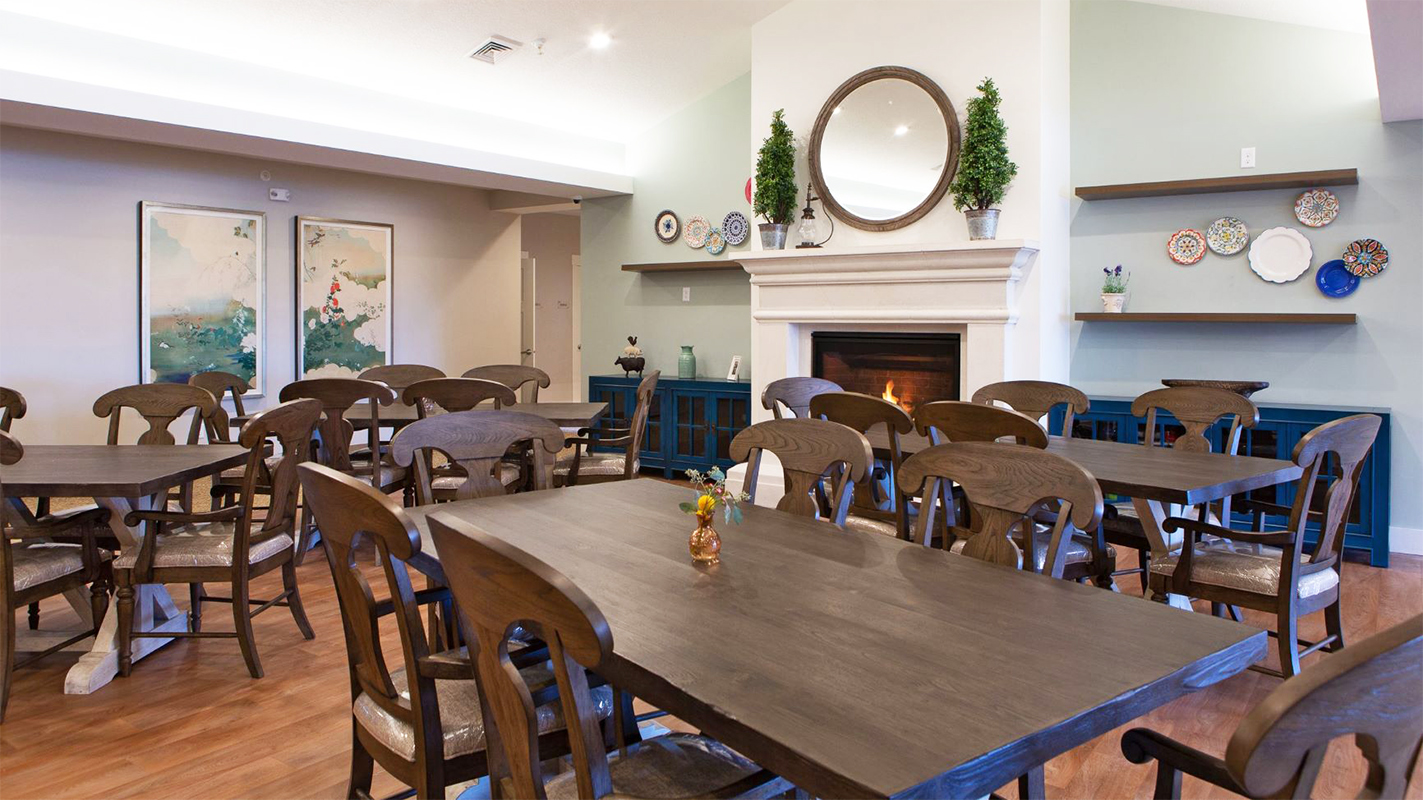
Questions to ask when exploring little assisted living homes
A tour informs you a lot, but only if you understand where to look. When you visit a little assisted living or memory care home, a couple of targeted questions can reveal how well the setting actually supports strong connections in dementia care:
- How many citizens live here, and what is the typical staff-to-resident ratio on days, evenings, and nights?
- How long have most of your caregivers operated in this home, and how do you deal with turnover or staffing gaps?
- Can you describe a normal day for somebody with dementia who lives here, from getting up to bedtime?
- How do you learn more about a new resident's life story, routines, and choices, and how is that info shared amongst staff?
- When a resident is upset or refusing care, what are the first three things your team normally tries before thinking about medication or outside intervention?
Pay attention to how rapidly staff members use citizens' names, who they present you to, whether residents make eye contact, and whether anyone seems parked in front of a tv for long stretches. Notice the smells from the cooking area, the tone of background noise, and how staff respond if a resident disrupts your tour.
The greatest small homes can answer in-depth concerns without defensiveness, and they will often offer stories that highlight their technique rather of relying just on policy language.
Bringing it back to what matters
Families frequently concern me asking about amenities, licensing, and care levels, however the questions that ultimately form their assurance are quieter: Who will see if my mother seems off? Who will sit with my hubby when he is terrified in the evening and can not keep in mind why? Who will commemorate the tiny triumphes that only matter if you actually know the person?
Small assisted living homes and residential memory care homes are uniquely positioned to respond to those questions with something more than a pamphlet line. Their scale makes indifference harder and connection more likely. Personnel and locals do not just share space; they share a life rhythm.
Assisted living, memory care, and respite care are not interchangeable labels. They are different setups of time, attention, and relationship. When dementia is part of the picture, that setup matters more than almost anything else. A smaller sized setting does not remove the losses that come with cognitive decrease, but it does make room for something simply as genuine: the continuous, everyday experience of being known.
BeeHive Homes of Maple Grove provides assisted living care
BeeHive Homes of Maple Grove provides memory care services
BeeHive Homes of Maple Grove is a memory care home for seniors
BeeHive Homes of Maple Grove provides respite care services
BeeHive Homes of Maple Grove offers 24-hour support from professional caregivers
BeeHive Homes of Maple Grove offers private bedrooms with private bathrooms
BeeHive Homes of Maple Grove provides medication monitoring and documentation
BeeHive Homes of Maple Grove serves dietitian-approved meals
BeeHive Homes of Maple Grove provides housekeeping services
BeeHive Homes of Maple Grove provides laundry services
BeeHive Homes of Maple Grove offers community dining and social engagement activities
BeeHive Homes of Maple Grove features life enrichment activities
BeeHive Homes of Maple Grove supports personal care assistance during meals and daily routines
BeeHive Homes of Maple Grove promotes frequent physical and mental exercise opportunities
BeeHive Homes of Maple Grove provides a home-like residential environment
BeeHive Homes of Maple Grove creates customized care plans as residents’ needs change
BeeHive Homes of Maple Grove assesses individual resident care needs
BeeHive Homes of Maple Grove accepts private pay and long-term care insurance
BeeHive Homes of Maple Grove assists qualified veterans with Aid and Attendance benefits
BeeHive Homes of Maple Grove encourages meaningful resident-to-staff relationships
BeeHive Homes of Maple Grove delivers compassionate, attentive senior care focused on dignity and comfort
BeeHive Homes of Maple Grove has a phone number of (763) 310-8111
BeeHive Homes of Maple Grove has an address of 14901 Weaver Lake Rd, Maple Grove, MN 55311
BeeHive Homes of Maple Grove has a website https://beehivehomes.com/locations/maple-grove/
BeeHive Homes of Maple Grove has Google Maps listing https://maps.app.goo.gl/n99VhHgdH879gqTH8
BeeHive Homes of Maple Grove has Facebook page https://www.facebook.com/BeeHiveMapleGrove
BeeHive Homes of Maple Grove won Top Memory Care Homes 2025
BeeHive Homes of Maple Grove earned Best Customer Service Award 2024
BeeHive Homes of Maple Grove placed 1st for Senior Living Memory Care Communities 2025
People Also Ask about BeeHive Homes of Maple Grove
What is the monthly room rate at BeeHive Homes of Maple Grove?
The monthly rate depends on each resident’s care needs, room selection, and personalized care plan. Before move-in, we complete an initial assessment to better understand your loved one’s health, safety, mobility, personal care, and memory care needs. From there, we provide clear pricing based on the level of support required. Our goal is to keep families informed with transparent pricing and no hidden fees.
Does BeeHive Homes of Maple Grove only offer Memory Care?
BeeHive Homes of Maple Grove offers enhanced assisted living with specialized memory care support. We are experienced in caring for seniors living with Alzheimer’s, dementia, and other forms of memory loss, while also welcoming residents who may not have a dementia diagnosis but would benefit from a secure, highly personalized care environment. Our homelike setting is especially helpful for seniors who are earlier in their dementia journey, as well as those who need extra structure, daily support, meaningful routines, and compassionate oversight. Each resident receives care tailored to their needs, helping them feel safe, supported, and truly at home.
Can residents stay at BeeHive Homes through the end of life?
In many cases, yes. Our goal is to help residents remain in a familiar, comforting environment for as long as we can safely meet their needs. There may be exceptions if a resident requires 24-hour skilled nursing services or has needs that cannot be safely supported in our memory care setting. When care needs change, our team works closely with families, physicians, hospice providers, and other care professionals to help make the next step as smooth and compassionate as possible.
Do you have nurses on staff?
Yes. BeeHive Homes of Maple Grove has a team of Registered Nurses who provide care oversight, assessments, care planning, and coordination with other healthcare professionals. The typical RN schedule is Monday through Friday from 7:00 AM to 6:00 PM and weekends from 9:00 AM to 5:30 PM, with a Registered Nurse on call after hours. This helps families feel confident that their loved one’s changing memory care needs are being monitored with attention and compassion.
What are the visiting hours at BeeHive Homes of Maple Grove?
Family and friends are welcome to visit anytime. Because routine is especially important for residents with memory loss, we encourage visitors to avoid scheduled meal times when possible: 8:00 AM, 11:30 AM, and 4:30 PM. Visits are an important part of helping residents feel connected, loved, and at home.
Are the rooms private?
Yes. Residents enjoy private memory care suites with fully accessible bathrooms. Families are encouraged to personalize the room with familiar furniture, photos, keepsakes, and comforting touches that help the space feel like their loved one’s own. BeeHive Homes of Maple Grove also offers accommodations for couples who wish to remain together, depending on availability./p>
How do I schedule a tour or learn more?
You can call BeeHive Homes of Maple Grove at 763-310-8111 to ask questions, discuss availability, or schedule a personal tour. Visiting in person is one of the best ways to experience the warmth of the home, meet the care team, and see whether BeeHive Homes is the right fit for your loved one.
What makes BeeHive Homes of Maple Grove different from larger memory care communities?
BeeHive Homes of Maple Grove offers memory care in a smaller, more personal residential setting. Residents are known by name, supported according to their individual routines, and cared for in a warm environment that feels like home. From private suites and home-cooked meals to life enrichment activities and secure spaces, our approach is centered on comfort, dignity, and meaningful connection.
Where is BeeHive Homes of Maple Grove located?
BeeHive Homes of Maple Grove is conveniently located at 14901 Weaver Lake Rd, Maple Grove, MN 55311. You can easily find directions on Google Maps or call at (763) 310-8111 Monday through Sunday 7am to 7pm.
How can I contact BeeHive Homes of Maple Grove?
You can contact BeeHive Homes of Maple Grove by phone at: (763) 310-8111, visit their website at https://beehivehomes.com/locations/maple-grove, or connect on social media via Facebook
Residents may take a trip to the Maple Grove History Museum The Maple Grove History Museum provides a calm, educational outing suitable for assisted living and senior care residents during memory care or respite care excursions